





You are being redirected to a third-party website. Any information that you provide to them is subject to the privacy policy and terms of use posted on their website.
Central Bark®
Dog Training & Development
Help your dog be the best they can be with dog training
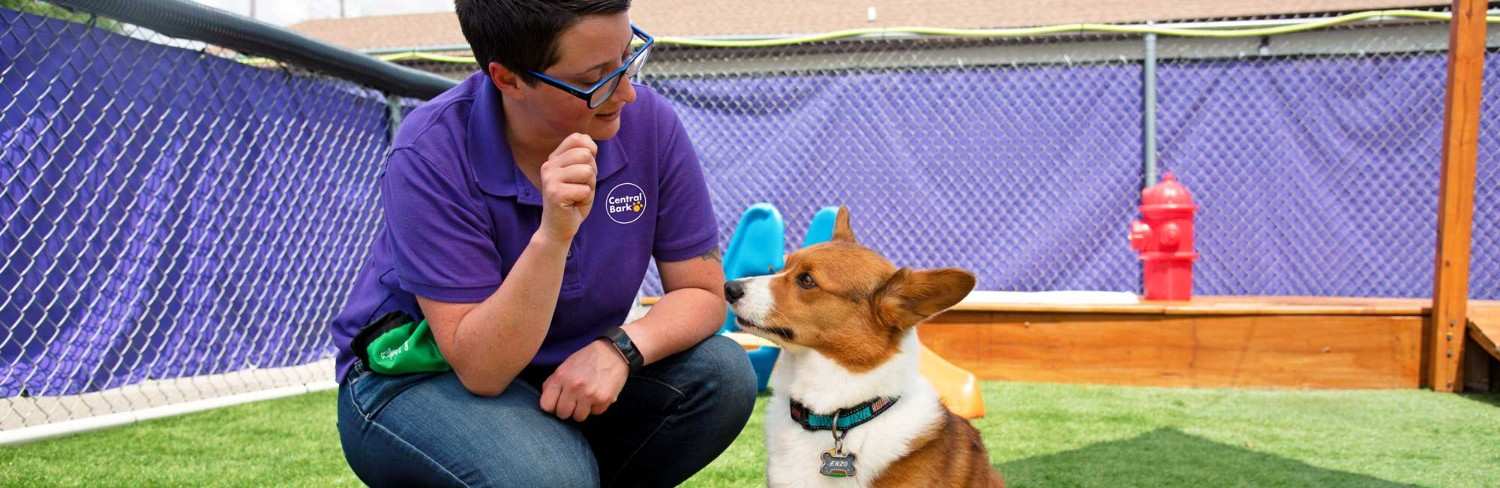
A well-trained dog is a happy dog – and part of a happy family. At Central Bark, our dog training professionals use fun and positive, reward-based techniques. They help dogs of all ages develop important life skills and behaviors.
We offer both individual training and development sessions. Also, there are group classes to reinforce good habits and foster the loving bond you have with your dog. Training builds a foundation for good canine citizenship and helps develop happy, social, and well-rounded dogs. From puppy training to advanced dog obedience training, our individual sessions and dog training classes make it easy to find dog training near you.
Services, options, and prices vary by store. Visit your location for details.
Find Your Local Store for
Available Services and Pricing

Dog Life Skills Taught at Central Bark
We customize our training programs to meet the unique needs of each dog. Our training services cover a wide range of skills and behaviors, including:
- Name recall: Teaching your dog to come to you when called by name is an essential skill for any dog owner. We use positive reinforcement to help your dog learn to come when called, even in distracting environments.
- Sit, stay, down, wait, and leave-it: These are some of the basic commands that every dog should know. Our dog training includes positive reinforcement techniques. These teach your dog these essential skills, which can help improve their behavior and make them easier to manage.
- Door and gate control: Teaching your dog to wait patiently at doors and gates can help prevent them from running out in unsafe areas. Our trainers can teach your dog to enter and depart on cue while waiting peacefully at gates and doors.
- Loose-leash walking: It might be annoying and even hazardous if your dog tugs on the leash when you’re out walking. Our trainers can help teach your dog to walk calmly on a loose leash, making walks more enjoyable for both you and your dog.
- And more: In addition to these dog training skills, our trainers can also work with you and your dog on other behaviors or issues that your pup may be experiencing, such as separation anxiety, barking, or destructive chewing.
At our Central Bark doggy daycare facility, we’re committed to helping your dog reach their full potential. Get in touch with us right away to find out more about our training options and how we can make your furry friend’s life better!
What a Training Session Looks Like
Training sessions at Central Bark fit naturally into your dog’s day care visit. A trainer works one-on-one with your dog on the specific skills you’re focused on, whether that’s basic obedience, loose-leash walking, or calming enrichment activities. Sessions are kept positive and reward-based, so your dog stays engaged and motivated rather than stressed. Many owners see steady progress after just a few sessions, and our trainers are happy to share simple exercises you can practice at home between visits.
Dog Training & Development Options:

Training Tutor
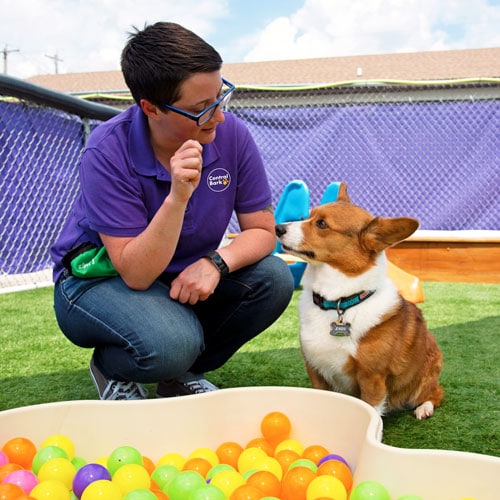
Personalized one-on-one training sessions during day care visits help your dog develop important skills and behaviors like name recall, sit, stay, down, wait, leave-it, door and gate control, and loose-leash walking. Excellent for your dog and easy for you! Your dog will come home tired and well-socialized, with the training and skills they need to be a well-behaved member of your family.
One-on-One Development
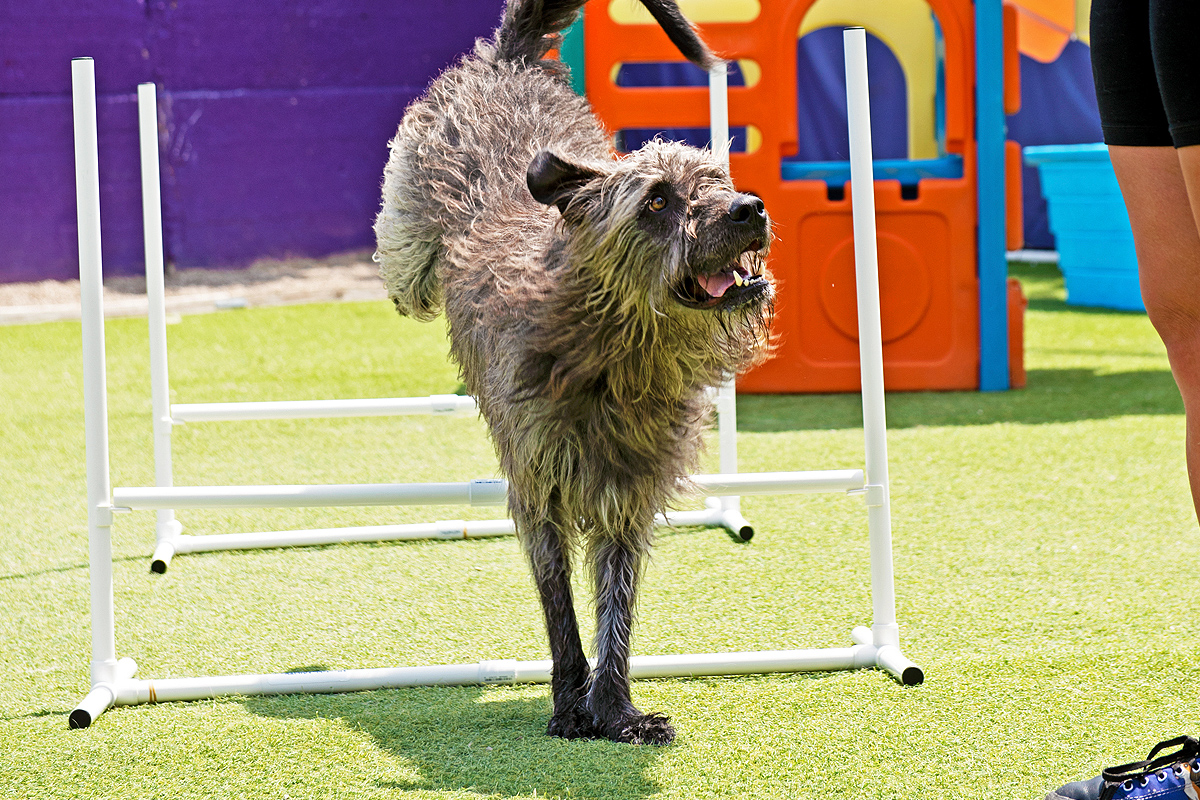
Personalized One-on-One Development sessions give your dog the extra attention they love and the freedom to use their senses and safely explore their instincts through interactive toys, puzzles, and games. It’s fun and rewarding and exercise their bodies and minds and engage their senses. Add complexity with fitness and agility equipment.

Rest Period Development
Your dog gets to relax and recharge in their own private space with calming interactive toys and healthy food pairings tailored to their preferences and diet. It promotes physical and mental relaxation, which can help them achieve a healthy balance of play, learning, and rest. It can also help them become more comfortable in crates by building positive associations.
Dog Training & Development Gallery



 Kristy M
 Super friendly and professional. Highly recommended. Our pup had a fabulous first day!
Lynn. A Ellie's recent stayover was the longest thus far, and I felt such a peace knowing that Ellie was in the best of hands!! I was comfortable mostly because I know how much she enjoys her daycare days. She loves it!! I'm so happy that Central Bark West Columbia is in [...]
Katie M. Our sweet Leo absolutely loves his daycare days. The staff is always friendly and have been helpful with any questions I’ve had. We are so happy we found a place that’s safe for our pup when we can’t be with him.
Megan J. Rosie had her first ever Spa Day! She smelled so good and she felt so soft after her bath! I can’t wait for her to go again. Elizabeth did a wonderful job!
Rachel I. Central Bark is by far the best place to take your fur baby. The staff is friendly, knowledgeable, and love all the pets as their own. Thank you Central Bark!!!!
Alicia L This is the only place we will leave our furbaby when traveling. It is very clean and our furbaby gets so excited when we pull up!
 Sheila T.
 The staff is amazing, and Otto has a good time...he's always smiling in the pictures!
 Lynn R.
 Central Bark staff work with your dog's personality to acclimate them to the environment. Our Maggie is very timid, and they worked with her so that now she plays with the other dogs. She is worn out for the evening and the next day. Thank you, Central Bark!
 Jennifer F.
 This is an amazing place to send your furry friends! Our pup Mahogany (Huggy) gets so excited every time we pull in to the parking lot. He always comes home happy & pooped out! The staff is friendly and just as excited to see Huggy as he is to see [...]
Frequently Asked Questions
What dog training options does Central Bark offer?
Central Bark offers positive reward-based dog training options designed to help dogs build practical skills, strengthen communication, and learn behaviors that support everyday life. Depending on your Central Bark location, training options may include Training Tutor sessions during day care and boarding, group training classes, and other training programs for puppies and adult dogs. Because training services vary by location, contact your local Central Bark or visit its website to explore available options and find the right training experience for you and your dog.
Can I book individual dog training sessions or training packages?
Central Bark dog training options are designed to accommodate different dogs, goals, and training needs. Depending on your Central Bark location and the training services offered, individual sessions, training packages, or other training options may be available. Contact your local Central Bark or explore its available training services online to find the option that best fits you and your dog.
What is positive reward-based dog training?
Positive reward-based dog training teaches and reinforces desired behaviors by rewarding dogs for successful choices. Rewards are tailored to the individual dog and may include treats, toys, play, verbal praise, or petting. This approach helps dogs learn useful life skills while supporting a positive relationship between dogs and their families.
When should I start training my puppy?
Puppies begin learning from birth, and learning continues throughout their lives. For pet parents, training can start as soon as your puppy comes home with simple, age-appropriate skills and routines. Early training can focus on communication, positive reinforcement, household routines, social skills, and foundational cues. Central Bark also offers Puppy Hour, a free opportunity to help your puppy learn, socialize, and build positive early experiences while you connect with Central Bark professionals about your puppy’s needs.
Central Bark Whole Dog Care
Our Whole Dog Care approach offers a full range of fun and personalized products and services to promote your dog’s physical, mental, and emotional health and happiness throughout their entire life.