





You are being redirected to a third-party website. Any information that you provide to them is subject to the privacy policy and terms of use posted on their website.

Central Bark®
Dog Training & Development
Help your dog be the best they can be with dog training
A well-trained dog is a happy dog – and part of a happy family. At Central Bark, our dog training professionals use fun and positive, reward-based techniques. They help dogs of all ages develop important life skills and behaviors.
We offer both individual training and development sessions. Also, there are group classes to reinforce good habits and foster the loving bond you have with your dog. Training builds a foundation for good canine citizenship and helps develop happy, social, and well-rounded dogs. From puppy training to advanced dog obedience training, our individual sessions and dog training classes make it easy to find dog training near you.
Services, options, and prices vary by store. Visit your location for details.
Find Your Local Store for
Available Services and Pricing

Dog Life Skills Taught at Central Bark
We customize our training programs to meet the unique needs of each dog. Our training services cover a wide range of skills and behaviors, including:
- Name recall: Teaching your dog to come to you when called by name is an essential skill for any dog owner. We use positive reinforcement to help your dog learn to come when called, even in distracting environments.
- Sit, stay, down, wait, and leave-it: These are some of the basic commands that every dog should know. Our dog training includes positive reinforcement techniques. These teach your dog these essential skills, which can help improve their behavior and make them easier to manage.
- Door and gate control: Teaching your dog to wait patiently at doors and gates can help prevent them from running out in unsafe areas. Our trainers can teach your dog to enter and depart on cue while waiting peacefully at gates and doors.
- Loose-leash walking: It might be annoying and even hazardous if your dog tugs on the leash when you’re out walking. Our trainers can help teach your dog to walk calmly on a loose leash, making walks more enjoyable for both you and your dog.
- And more: In addition to these dog training skills, our trainers can also work with you and your dog on other behaviors or issues that your pup may be experiencing, such as separation anxiety, barking, or destructive chewing.
At our Central Bark doggy daycare facility, we’re committed to helping your dog reach their full potential. Get in touch with us right away to find out more about our training options and how we can make your furry friend’s life better!
What a Training Session Looks Like
Training sessions at Central Bark fit naturally into your dog’s day care visit. A trainer works one-on-one with your dog on the specific skills you’re focused on, whether that’s basic obedience, loose-leash walking, or calming enrichment activities. Sessions are kept positive and reward-based, so your dog stays engaged and motivated rather than stressed. Many owners see steady progress after just a few sessions, and our trainers are happy to share simple exercises you can practice at home between visits.
Dog Training & Development Options:

Training Tutor
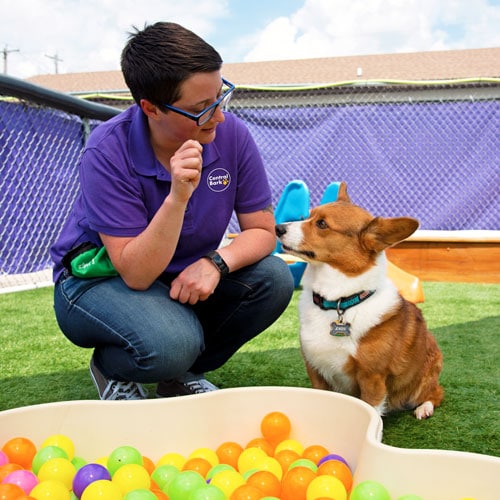
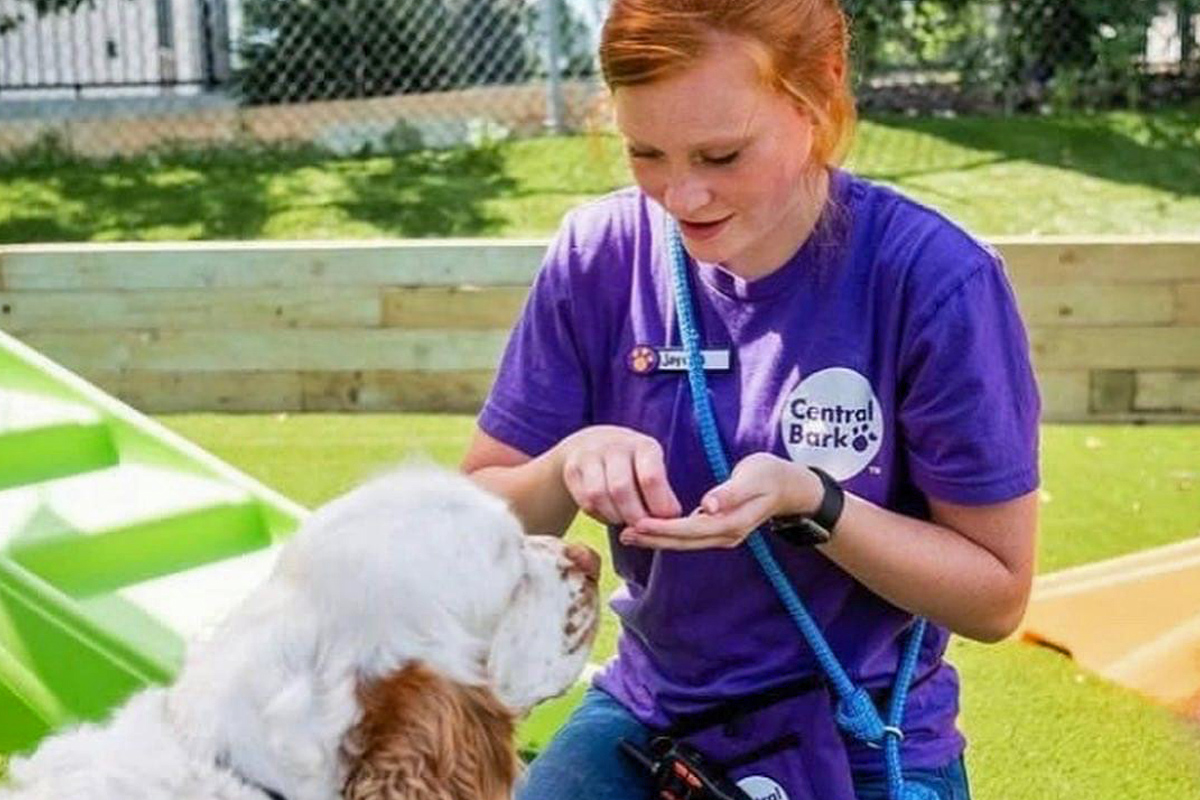
Personalized one-on-one training sessions during day care visits help your dog develop important skills and behaviors like name recall, sit, stay, down, wait, leave-it, door and gate control, and loose-leash walking. Excellent for your dog and easy for you! Your dog will come home tired and well-socialized, with the training and skills they need to be a well-behaved member of your family.
One-on-One Development
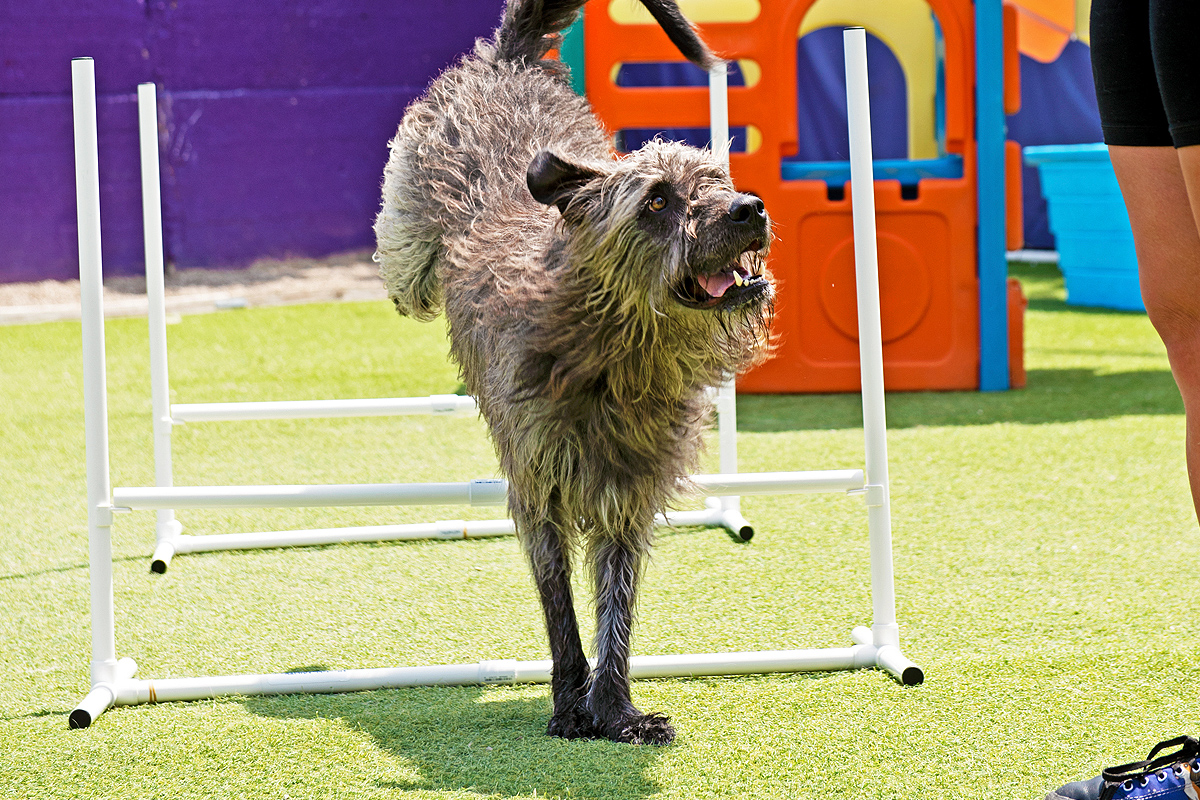
Personalized One-on-One Development sessions give your dog the extra attention they love and the freedom to use their senses and safely explore their instincts through interactive toys, puzzles, and games. It’s fun and rewarding and exercise their bodies and minds and engage their senses. Add complexity with fitness and agility equipment.

Rest Period Development
Your dog gets to relax and recharge in their own private space with calming interactive toys and healthy food pairings tailored to their preferences and diet. It promotes physical and mental relaxation, which can help them achieve a healthy balance of play, learning, and rest. It can also help them become more comfortable in crates by building positive associations.
Dog Training & Development Gallery



 Kristy M
Super friendly and professional. Highly recommended. Our pup had a fabulous first day!
Lynn. A Ellie's recent stayover was the longest thus far, and I felt such a peace knowing that Ellie was in the best of hands!! I was comfortable mostly because I know how much she enjoys her daycare days. She loves it!! I'm so happy that Central Bark West Columbia is in [...]
Katie M. Our sweet Leo absolutely loves his daycare days. The staff is always friendly and have been helpful with any questions I’ve had. We are so happy we found a place that’s safe for our pup when we can’t be with him.
Megan J. Rosie had her first ever Spa Day! She smelled so good and she felt so soft after her bath! I can’t wait for her to go again. Elizabeth did a wonderful job!
Rachel I. Central Bark is by far the best place to take your fur baby. The staff is friendly, knowledgeable, and love all the pets as their own. Thank you Central Bark!!!!
Alicia L This is the only place we will leave our furbaby when traveling. It is very clean and our furbaby gets so excited when we pull up!
 Sheila T.
The staff is amazing, and Otto has a good time...he's always smiling in the pictures!
 Lynn R.
Central Bark staff work with your dog's personality to acclimate them to the environment. Our Maggie is very timid, and they worked with her so that now she plays with the other dogs. She is worn out for the evening and the next day. Thank you, Central Bark!
 Jennifer F.
This is an amazing place to send your furry friends! Our pup Mahogany (Huggy) gets so excited every time we pull in to the parking lot. He always comes home happy & pooped out! The staff is friendly and just as excited to see Huggy as he is to see [...]
Frequently Asked Questions
How to choose the best day care for your dog
Selecting the right doggy day care is an important decision for you and your family. You want to make sure you find the right fit for your dog and your family’s needs. Follow these tips to find the perfect place for your pup!
Tour the day care center before leaving your dog there. We recommend visiting several centers in your area before making a final decision.
While you’re there, ask yourself:
- Is the play space clean, odor-free, comfortable, and safe for the center’s stated capacity?
- Pay attention to how the management and staff treat you, your dog, and the dogs in their care. Are they mature, knowledgeable, courteous, professional, and patient at all times?
- Note how the dogs respond to the staff – do they seem happy, relaxed, and excited? How do staff members greet and treat each dog?
- How do other dogs act during your visit – relaxed, happy, stressed, scared, or out of control?
- Is there a great deal of noise?
- Does the facility seem well organized and equipped with essential tools and supplies? Look for access to fresh, clean water, sanitation tools, ready access to treats to reinforce good behavior in playgroups, toys, secure fencing, rubber flooring in the inside play spaces, and access to outdoor play spaces.
- Are there enough crates for every dog on-site in case of an emergency?
- Are the dogs ever left alone together without a staff member present?
- Are the handlers engaged with the dogs in their care and actively working with them? Or are they sitting on the sidelines?
Questions to ask the doggy day care provider:
- Will my dog get individual attention time with staff?
Ask if staff will have time to work individually with your dog on behaviors, play with them, and give them support and love while at day care. - Are there small group play options?
Small playgroup options help ensure your dog will have a social environment that allows them the freedom and comfort to thrive based on their unique needs, preferences, and play styles. - What’s the daily schedule? Is this tailored to my dog’s unique needs and preferences?
Dogs thrive on routine, so the center should have a clear schedule for how things run every day. A consistent program tailored to your dog’s individual needs and style will promote a healthy and happy dog. - Are there regularly scheduled playtimes and nap times throughout the day?
Day care should offer your dog a safe and balanced day of play, learning, rest, and love so you can look forward to a happy, well-balanced dog at the end of every day. - How and where are the dogs’ given downtime to wind down from the day’s activities to help prevent exhaustion and overstimulation?
Maintaining a healthy balance of rest and play is important for the physical, mental, and social health of dogs. Just like human athletes, rest helps dogs avoid bodily injury and provides a space for them to unwind, so they do not become over-stimulated or over-aroused during play. This creates a much safer social environment for dogs. - Are there fenced and secure outdoor play areas?
Safe outdoor areas are important for a healthy, fun playtime. Whether it is romping in the snow or playing in swimming pools, everyone loves recess outside! - How are new dog introductions handled?
The center should clearly outline their procedures around new dog introductions, with effective policies that encourage happy, healthy, and lasting relationships and experiences. - What training does the staff receive?
Doggy day care staff should be professionally trained and educated in animal behavior, socialization, and obedience training to ensure every dog’s well-being. - Are the dogs supervised at all times?
A trained staff member should ALWAYS supervise dogs. - Ask about behavior management tools used at the facility while caring for the dogs. What happens if your dog does something right? What happens if your dog does something wrong?
Staff should use positive reinforcement and reward-based techniques to develop and reinforce behaviors that will enrich dogs’ lives at home and day care. Avoid centers that use punishment or correction to manage dog’s behavior as those techniques can create negative associations and fear. Utilizing reward-based techniques and positive reinforcement, on the other hand, can help build healthy relationships and happy experiences. - What provisions are there for avoiding dog scuffles?
Ask staff how they manage the dogs in their care. What do they look for in dog-dog interactions? How do they deal with emergencies and scuffles? How do they interrupt and redirect dogs? How do they build useful playgroup skills to keep the dogs safe proactively? Pay attention to how staff redirects dogs who need additional support to stay safe and whether they respond promptly and use effective strategies in these situations. - Is there an in-depth interview to determine relevant background, behavioral, and health information including confirmation of spay/neuter, proof of vaccinations, flea and tick prevention, etc.? How is this information kept up to date?
Find out what kind of assessments and evaluations the center uses before they accept a new dog. Also, every dog’s information should be regularly updated and kept on file to prevent illness and injuries. - Do they have safety, cleaning, and disinfecting policies and procedures? What are they?
Is 5 months too old to train a puppy?
Not at all! It’s never too early or too late to begin building positive associations and using reward-based methods to teach your puppy new skills and behaviors.
Establish a training schedule now to help your puppy learn desired behaviors like walking nicely on a leash and basic cues like sit, stay, and loose-leash walking. Practicing these skills at home is critical, but it’s always a good idea to enlist the help of a professional to get a jump start teaching your puppy all the things you want them to know and set them up for success! Central Bark® offers everything you need to help you train your dog, including expert training and classes, so you and your puppy can learn and bond together.
Learn more about our training classes.
Visit our Dog Blog for more helpful tips.
What’s a Behavior Assessment and why is it important?
As part of joining the Central Bark® family, our expert staff conducts a thorough behavior assessment at your local Central Bark store. These assessments help ensure that your dog is placed with a playgroup they’re comfortable with so they can play safely every day they’re with us.
This four-day evaluation, while your dog participates in our Enrichment Day Care, assesses your dog’s:
- Comfort and social skills with people
- Social skills and playstyle with other dogs to help determine the playgroup and play schedule they can benefit from the most
- Comfort in both indoor and outdoor play spaces
- Comfort in rest areas and a crate
- Ability to share resources like water and toys in social settings
- Level of comfort taking treats in social settings
This process gives us a chance to get to know you and your dog while your dog gets acquainted with their new favorite place away from home. Through the entire four days, your dog’s comfort and safety is our top priority.
Once your pup passes all the behavior assessment elements, you are welcome to sign up for any of our daycare services or a sleepover!
To schedule a Behavior Assessment for your dog, please contact your local store.
NOTE: Please bring all required signed forms, vaccination proof, and a collar and leash for your behavior assessment.
How do you crate train a dog?
For dogs, being comfortable in a crate is a life skill that is incredibly useful for them and their owners. If you have ever traveled with your dog or had the unfortunate experience of an overnight stay at the vet, knowing your dog is comfortable in a crate is immeasurably comforting.
Crate training can take just days or a few months, based on your dog’s age, temperament, and past experiences with crates. The two keys to successful crate training are to keep the experience positive and go slowly.
When your puppy is not in their crate, keep the door open and reward them every time they choose to enter, even if you didn’t ask them to enter it. When crating your puppy, give them a safe enrichment item (like a stuffed Kong) that will keep them busy and allow them to self-soothe while confined. Remember that crate training should take place in a series of small, slow steps that will help your puppy become more comfortable.
Central Bark® offers everything you need to help you care for your new puppy. Our Enrichment Day Care gives puppies all the socialization, exercise, mental stimulation, and rest they need for a lifetime of happiness with you and your family. We also offer expert training and classes so you and your puppy can learn and bond together.
Learn more about our training classes.
Visit our Dog Blog for more helpful tips.
Central Bark Whole Dog Care
Our Whole Dog Care approach offers a full range of fun and personalized products and services to promote your dog’s physical, mental, and emotional health and happiness throughout their entire life.