
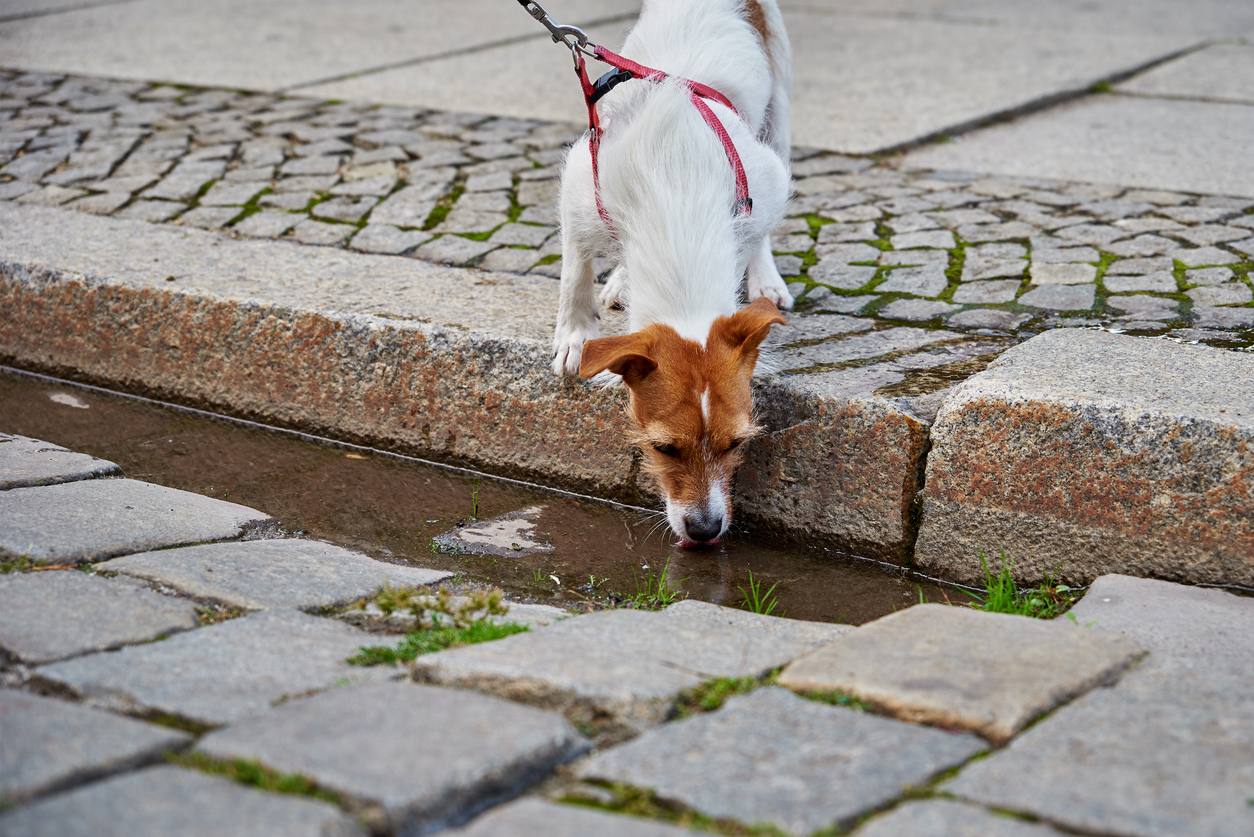
Springtime in the Chicago suburbs means longer walks, muddier paws, and very happy dogs. It also means a seasonal uptick in something less fun: giardia.
If you’ve never heard of it, you’re not alone — but it’s worth knowing about, especially this time of year.
What is giardia?
Giardia is a genus of microscopic, single-celled parasites that cause an intestinal infection in dogs, known as giardiasis. It’s actually the most common intestinal parasitic disease in the United States, according to PetMD. But despite the slightly alarming sound of that, it’s very treatable when caught.
How dogs get giardia
Giardia spreads through contaminated water, soil, surfaces, and fecal matter. Spring creates especially ripe conditions for exposure to giardia: As snow melts, the water can carry fecal residues that contain giardia.
Dogs can become infected when they drink from these puddles — or when they walk through the puddles and later lick their muddy paws. Even sniffing or licking after another infected dog can be enough.
How to tell if your dog has giardia
Here’s the tricky part: Not all infected dogs show signs. Many appear completely healthy even while carrying and shedding the parasite. When symptoms do appear, the most common is diarrhea — often frequent, loose, and particularly smelly. You might also notice vomiting, low energy, or gradual weight loss if the infection goes on for a while.
What to do if you suspect your dog has giardia
If you think your dog may have a giardia infection, call your vet. Giardia requires a diagnosis (usually from a stool sample) and a prescription; there are no approved over-the-counter treatments.
The good news is that most dogs recover fully within five to eight days of starting treatment. Your vet will typically retest 24 to 48 hours after treatment is complete to confirm the infection has cleared.
While your dog is recovering, a few things will help:
- Pick up waste immediately and often. Giardia cysts are infectious as soon as they’re passed, so prompt removal matters.
- Bathe your dog regularly during treatment to remove cysts from their coat — otherwise they can reinfect themselves through grooming.
- Clean their space. Hard surfaces can be disinfected with a diluted bleach solution or quaternary ammonium-based cleaners. Allow areas to dry fully before your dog returns to them.
- Wash your hands thoroughly after handling your dog or cleaning up after them. While the risk of humans contracting giardia from dogs is relatively low, good hygiene keeps it lower.
How we prevent giardia transmission at Central Bark
We take the health of your dog seriously with some of the strictest dog safety guidelines in the industry.
At Central Bark Aurora–Fox Valley, dog messes are cleaned up immediately. Urine and feces are addressed the moment they happen, and all play and sleep spaces are disinfected daily. We also do regular deep cleans beyond the daily routine.
The cleaning products we use — KennelSol for our indoor areas and WysiWash for our outdoor areas — are effective against a broad spectrum of pathogens, bacteria, and fungi. Both are also biodegradable and safe for use around pets and humans, because a clean facility shouldn’t require harmful, irritating, or unpleasant-smelling chemicals.
We know you trust us with your four-legged family members. Keeping that trust means being honest with you about risk and also making sure you’re confident in everything we do to protect your dogs while they’re with us.
Do you have any questions about our cleaning protocols or how we handle illness at the facility? We’re always happy to talk. Reach out to us at (630) 486-1277 or stop by and see the space for yourself.