Paradise Valley & Scottsdale
Dog Training & Enrichment
Help your dog be the best they can be
A well-trained dog is a happy dog – and part of a happy family. At Central Bark® Paradise Valley, our dog training professionals use fun and positive, reward-based techniques to help dogs of all ages develop important life skills and behaviors.
We offer both individual training and enrichment sessions as well as group classes to reinforce good habits and foster the loving bond you have with your dog. Training builds a foundation for good canine citizenship and helps develop happy, social, and well-rounded dogs.
Central Bark®
Paradise Valley
4848 E Cactus Rd, Suite 500,
Scottsdale, AZ 85254Get Directions
paradisevalley@centralbarkusa.com
Closed By Appointment Only
Book Now
Teach your dog:
Open up your dog’s possibilities with Central Bark’s offerings. We concentrate on key areas:
- Name Recognition: Ensure safety by teaching your dog to respond positively when called.
- Fundamental Commands: Master essential instructions such as sit, stay, down, wait, and leave-it, using positive reinforcement to enhance behavior.
- Door and Gate Etiquette: Instruct your dog to enter and exit calmly upon command, promoting polite behavior.
- Relaxed Leash Walking: Enjoy pleasant walks by training your dog to walk calmly on a loose leash, eliminating pulling.
- Extra Behaviors: Address challenges like separation anxiety, excessive barking, or destructive chewing with support from our dedicated trainers.
Together, let’s enrich your dog’s life and unleash their full potential.

Dog Training & Enrichment Options:
Training Tutor
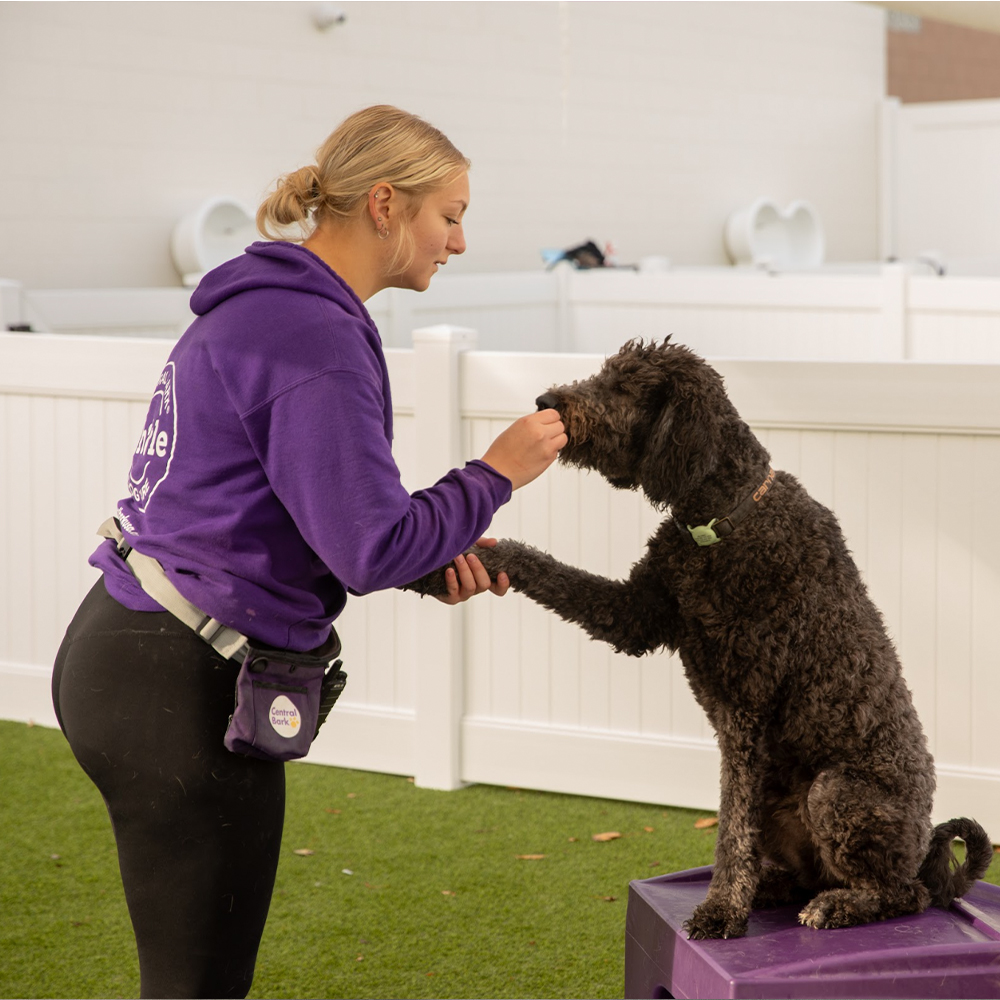
Personalized one-on-one training sessions during day care visits help your dog develop important skills and behaviors like name recall, sit, stay, down, wait, leave-it, door and gate control, and loose-leash walking. Excellent for your dog and easy for you! Your dog will come home tired and well-socialized, with the training and skills they need to be a well-behaved member of your family.
One-on-One Enrichment
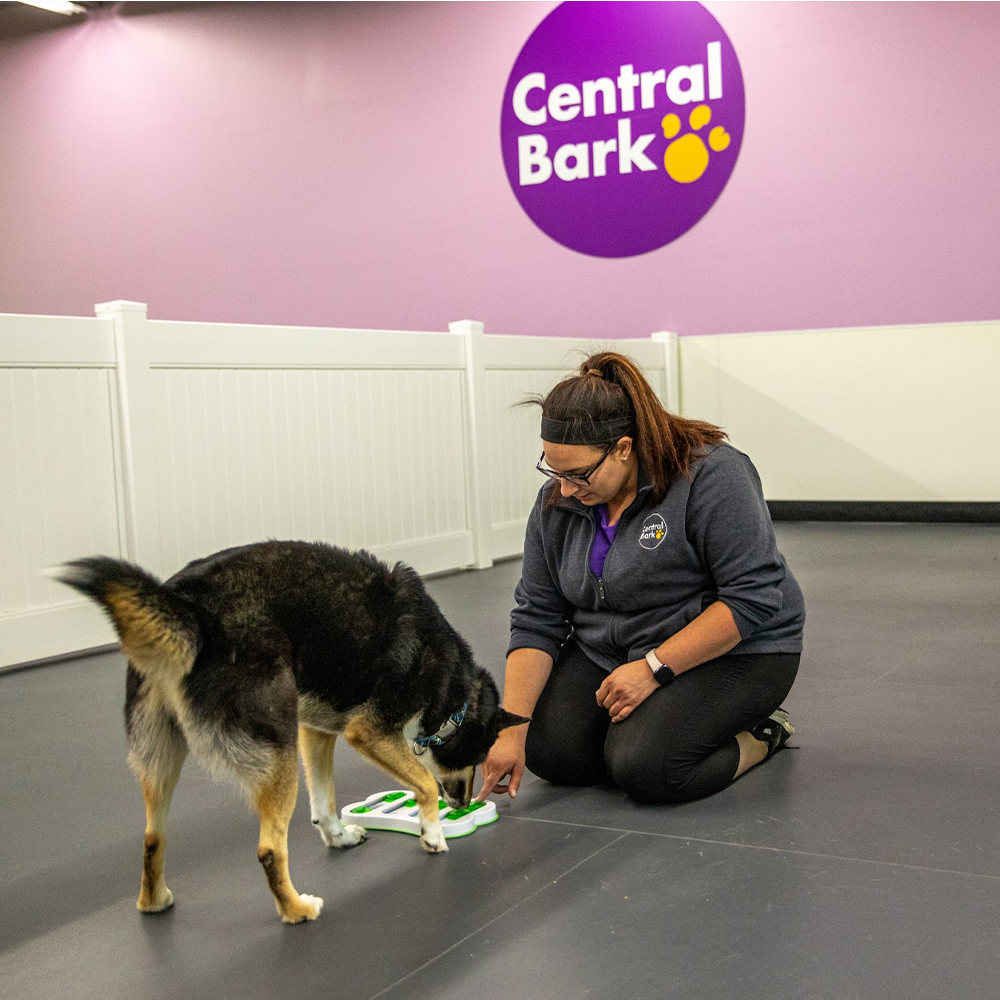
Personalized One-on-One Enrichment sessions in Paradise Valley & Scottsdale, AZ, give your dog the extra attention they love and the freedom to use their senses and safely explore their instincts through interactive toys, puzzles, and games. It’s fun and rewarding and exercise their bodies and minds and engage their senses. Add complexity with fitness and agility equipment.

Rest Period Enrichment
Your dog gets to relax and recharge in their own private space with calming interactive toys and healthy food pairings tailored to their preferences and diet. It promotes physical and mental relaxation which can help them achieve a healthy balance of play, learning, and rest. It can also help them become more comfortable in crates by building positive associations.
Pricing
Day Care Add-ons
| Service | Price |
|---|---|
| Training Tutor One-on-one training session during your dog’s visit to practice important cues and behavior skills. Packages available. | 25 |
| One-on-One Enrichment Personalized session during your dog’s visit with interactive toys, puzzles, and games to exercise your dog’s body and mind. | 20 |
| Rest Period Enrichment Private space with calming interactive food toy to help your dog achieve a healthy balance of activity and rest. | 8 |
Group Dog Training Classes
| Service | Price |
|---|---|
| Puppy Preschool (6-class course) In this class, we’ll help you and your puppy take your relationship and understanding of communication to the next level. With a focus on positive socialization, comfort conditioning, and confidence building, you’ll practice all the skills needed to support your puppy on their journey to the next stage of development! Starts: Monday, January 5th, 6:30–7:30 PM Ends: February 23rd Notes: No class on MLK Day (January 19th) or Presidents’ Day (February 16th) *This class is for puppies between 8-16 weeks of age. *Vaccinations required (DHPP and Bordetella). | 250 |
| Basic Life Skills (6-class course) Grow your hands-on training and management skills with your dog, no matter their age! You’ll work on developing strong foundations for important life skills like recall, loose-leash walking, stationary behaviors, and relaxation around distractions. Starts: Tuesday, January 6th, 6:30–7:30 PM Ends: February 10th *This class is for dogs of all ages. *Vaccinations required (DHPP, Rabies (depending on age), and Bordetella). *This class is not suitable for dogs who are reactive to other dogs or people. | 250 |
| Intermediate Life Skills (6-class course) Continue developing all the important life skills that you laid the foundations for in the Basic Life Skills class. You’ll start to combine your skills to mimic real-life scenarios, with more training challenges in class and at home! Starts: Wednesday, January 7th, 6:30–7:30 PM Ends: February 11th Prerequisite class: Basic Life Skills *This class is for dogs of all ages. *Vaccinations required (DHPP, Rabies (depending on age), and Bordetella). | 250 |
| Advanced Life Skills (6-class course) Take your life skills to the next level! You’ll compete with your classmates in fun training challenges and continue to strengthen your relationship with your dog as you develop your skill set together. This class is a great steppingstone to begin preparing you and your dog for the AKC Canine Good Citizen test. Starts: Thursday, January 8th, 6:30–7:30 PM Ends: February 12th Prerequisite class: Intermediate Life Skills *This class is for dogs of all ages. *Vaccinations required (DHPP, Rabies (depending on age), and Bordetella). | 250 |
Group Training Class Inquiries
Group dog training classes are open to the public. Registration is required. To learn more about classes and availability, please fill out the form below or call (480) 550-8988.
Packages available. Prepaid packages are nonrefundable. All sales are final.
If you have any concerns about food sensitivities or toys, please speak to an associate at the front desk to discuss options.

The facility is clean and well set up with indoor and outdoor areas. Location is super convenient and its great that they have day care, boarding, and grooming all in one spot so you’re not running around to different places.
Staff is friendly and always keeps you updated. Dan has built a solid operation here. Would definitely recommend if you’re looking for dog care in the area.
FAQs About Dog Training & Enrichment in Paradise Valley & Scottsdale, AZ
With a variety of training solutions available, training costs depend upon what kind of training you and your dog need.
Central Bark® offers everything you need to help you train your new puppy or older dog. Including group classes and Training Tutor sessions that can take place during day care. Our expert training and classes help you, and your dog learn and bond together.
As part of joining the Central Bark® family, our expert staff conducts a thorough behavior assessment at your local Central Bark store. These assessments help ensure that your dog is placed with a playgroup they’re comfortable with so they can play safely every day they’re with us.
This four-day evaluation, while your dog participates in our Enrichment Day Care, assesses your dog’s:
- Comfort and social skills with people
- Social skills and playstyle with other dogs to help determine the playgroup and play schedule they can benefit from the most
- Comfort in both indoor and outdoor play spaces
- Comfort in rest areas and a crate
- Ability to share resources like water and toys in social settings
- Level of comfort taking treats in social settings
This process gives us a chance to get to know you and your dog while your dog gets acquainted with their new favorite place away from home. Through the entire four days, your dog’s comfort and safety is our top priority.
Once your pup passes all the behavior assessment elements, you are welcome to sign up for any of our daycare services or a sleepover!
To schedule a Behavior Assessment for your dog, please contact your local store.
NOTE: Please bring all required signed forms, vaccination proof, and a collar and leash for your behavior assessment.
Our trainers can help your dog learn a variety of essential life skills and behaviors during their one-on-one sessions. These include fundamental commands like sit, stay, down, wait, and leave-it, as well as more specific skills such as calm door and gate etiquette and relaxed loose-leash walking. The training is tailored to help your dog become a well-behaved and confident member of the family.
Whether you’re crate training, leash walking, or potty training your pup, consistency is key. It’s crucial to establish a routine, practice positive reinforcement, supervise your puppy (especially when potty training), and avoid punishing your puppy when mistakes happen.
Central Bark® offers everything you need to help you train your puppy. We offer expert training and classes so you and your puppy can learn and bond together.
Learn more about our training classes.
Visit our Dog Blog for more helpful tips.