Dog training advice can feel overwhelming. From outdated dominance theories to punishment-based tools, pet parents are often given conflicting information. At Central Bark Rochester, MN, we follow the science — and the science is clear: positive reinforcement dog training is the most effective, humane, and sustainable way to teach dogs.
Understanding how dogs learn helps set realistic expectations and builds a stronger bond between dogs and their families.
What Is Positive Reinforcement Dog Training?
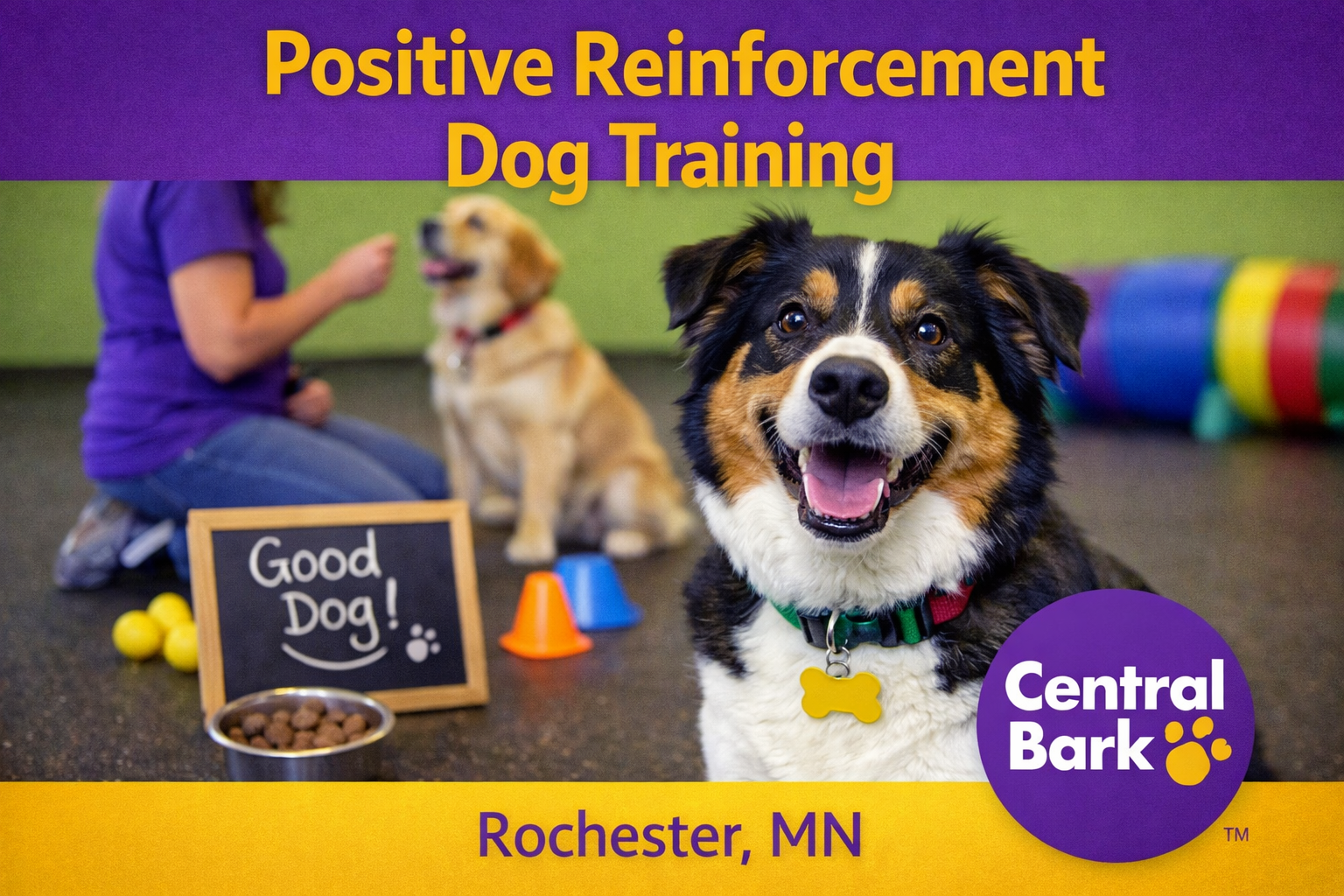
Positive reinforcement dog training means adding something the dog finds rewarding immediately after a desired behavior, increasing the likelihood that behavior will happen again.
Rewards can include:
- Food treats
- Praise
- Toys
- Play
- Access to preferred activities
This approach focuses on teaching dogs what to do, rather than punishing them for mistakes.
At Central Bark Rochester, MN, positive reinforcement dog training is the foundation of our daycare, boarding, puppy hour, and grooming services.
Where Negative Reinforcement and Management Fit
There is often confusion around training terminology. While we do not use punishment or aversive tools, it’s important to understand the role of management and prevention.
Examples include:
- Removing food from counters so counter-surfing isn’t rewarded
- Trading a shoe for an appropriate chew toy
- Using gates or leashes to prevent unwanted behaviors
These strategies are not punishment — they simply prevent dogs from practicing behaviors we don’t want while we positively reinforce the behaviors we do want.
What the Science Says
Veterinary and animal behavior experts overwhelmingly support positive reinforcement dog training.
- The American Veterinary Society of Animal Behavior (AVSAB) states that reward-based training is the most effective and humane approach.
- The American Animal Hospital Association (AAHA) recommends positive reinforcement as the standard of care for training and behavior modification.
Multiple peer-reviewed studies show that dogs trained with aversive or punishment-based methods display:
- Increased stress behaviors
- Higher fear and anxiety levels
- Weaker dog–human relationships
- Increased risk of aggression
In contrast, dogs trained using positive reinforcement show better emotional stability and stronger bonds with their handlers.
Why Positive Reinforcement Works Better
🧠 Clear Communication
Dogs learn faster when they clearly understand which behaviors earn rewards.
❤️ Stronger Relationships
Dogs trained with rewards view humans as sources of safety and guidance — not fear.
😌 Lower Stress
Positive reinforcement training supports emotional wellbeing and confidence.
This is especially important in group environments like daycare, where trust and clear communication keep everyone safe.
Common Training Mistakes (and Better Alternatives)
- Jumping: Pushing dogs down still provides attention. Reward calm sitting instead.
- Chewing: Taking items away without a replacement causes frustration. Trade for approved chews.
- Barking: Yelling can reinforce excitement. Redirect and reward quiet behavior.
These small shifts make a big difference and align with positive reinforcement dog training principles.
How We Use Positive Reinforcement at Central Bark Rochester, MN
At Central Bark, positive reinforcement dog training is woven into everything we do:
- Daycare group management
- Boarding Comfort and Stress Management
- Puppy Hour socialization
- Enrichment activities
- Handling and transitions
- Grooming experiences
This approach helps dogs build confidence, social skills, and emotional resilience — not just obedience.
Final Thoughts
Positive reinforcement dog training isn’t just a philosophy — it’s a science-backed approach that prioritizes welfare, trust, and long-term success.
By choosing positive reinforcement dog training in Rochester, MN, you’re investing in your dog’s emotional health, behavior, and relationship with your family. At Central Bark Rochester, MN, we’re proud to support dogs and their families with training methods rooted in compassion, respect, and integrity.
References
- American Veterinary Society of Animal Behavior (AVSAB). Position Statement on Humane Dog Training. https://avsab.org
- American Animal Hospital Association (AAHA). Canine Behavior Guidelines. https://www.aaha.org
- Ziv, G. (2017). The effects of using aversive training methods in dogs. Journal of Veterinary Behavior.
- Vieira de Castro et al. (2020). Welfare impacts of aversive-based training. PLOS ONE.
✍️ Written by Lenny Hoisington
Owner & Operator, Central Bark Rochester, MN