Milwaukee Eastside
Dog Training & Enrichment
Help your dog be the best they can be
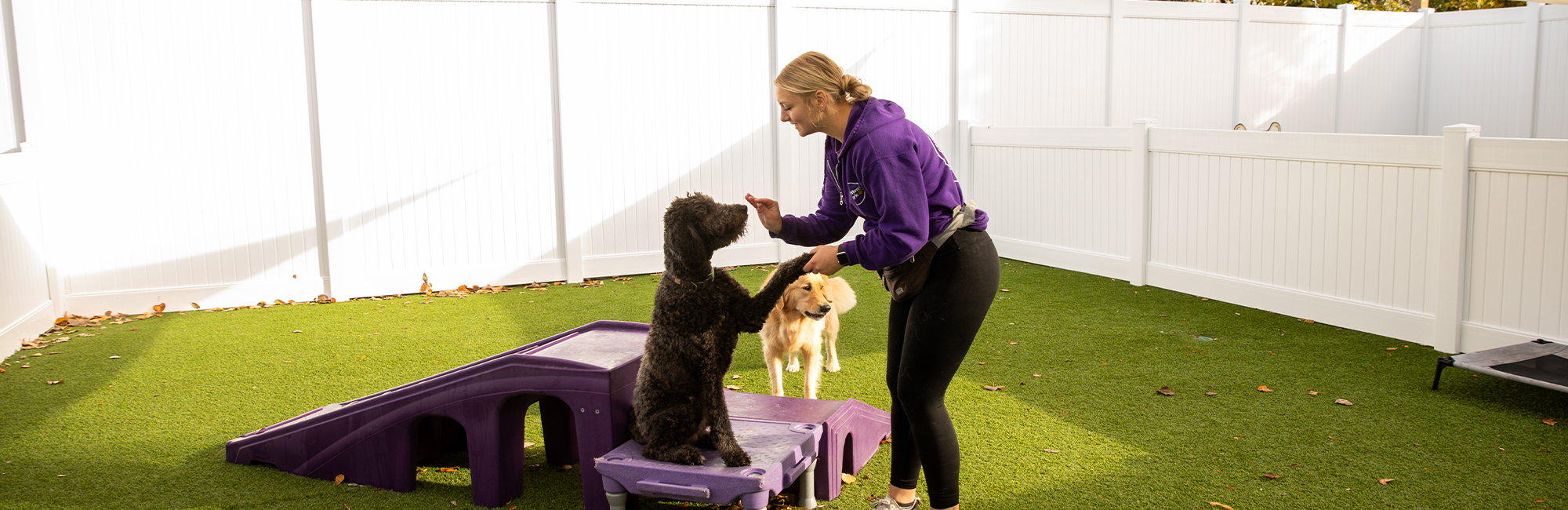
A well-trained dog is a happy dog – and part of a happy family. At Central Bark® Milwaukee Eastside, our dog training professionals use fun and positive, reward-based techniques to help dogs of all ages develop important life skills and behaviors.
We offer both individual training and enrichment sessions as well as group classes to reinforce good habits and foster the loving bond you have with your dog. Training builds a foundation for good canine citizenship and helps develop happy, social, and well-rounded dogs.
Teach your dog:
- Name recall
- Sit, stay, down, wait, and leave-it
- Door and gate control
- Loose-leash walking
- And more

Dog Training & Enrichment Options:
Training Tutor
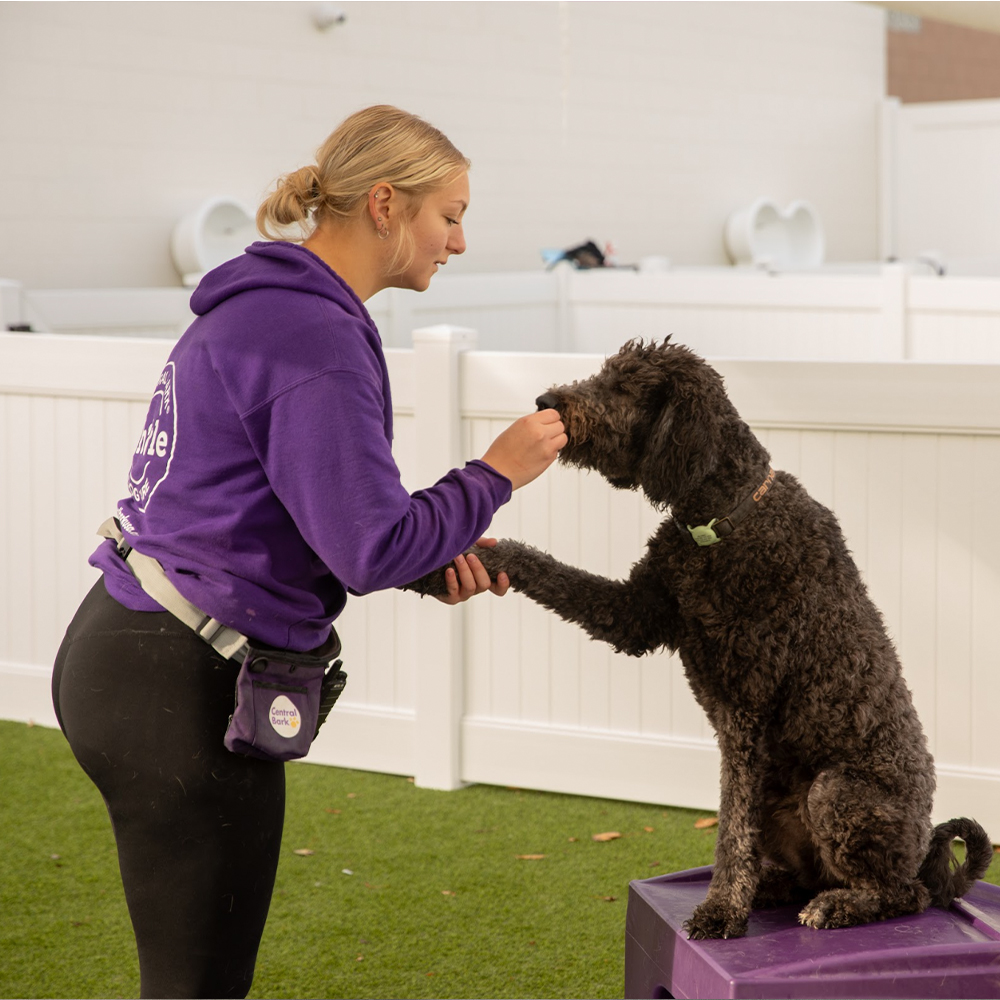
Personalized one-on-one training sessions during day care visits help your dog develop important skills and behaviors like name recall, sit, stay, down, wait, leave-it, door and gate control, and loose-leash walking. Excellent for your dog and easy for you! Your dog will come home tired and well-socialized, with the training and skills they need to be a well-behaved member of your family.
One-on-One Enrichment
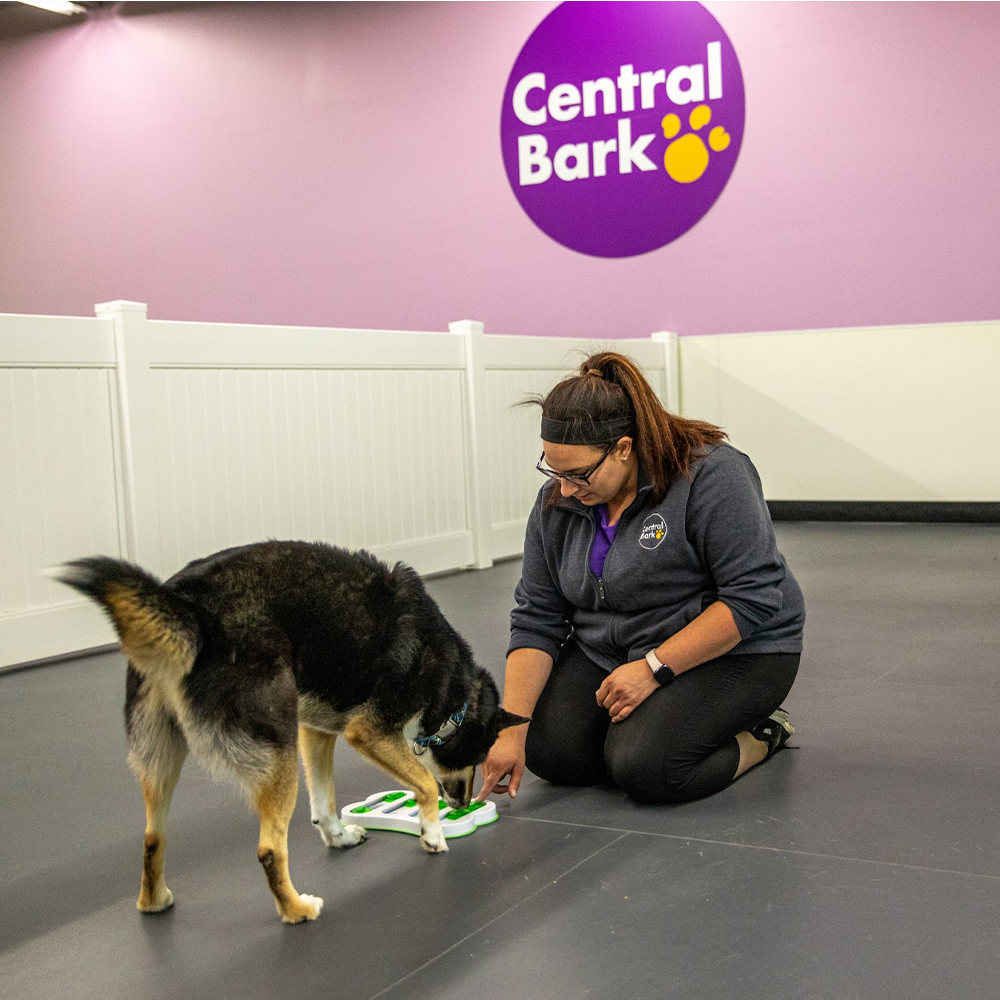
Personalized One-on-One Enrichment sessions give your dog the extra attention they love and the freedom to use their senses and safely explore their instincts through interactive toys, puzzles, and games. It’s fun and rewarding and exercise their bodies and minds and engage their senses. Add complexity with fitness and agility equipment.

Rest Period Enrichment
Your dog gets to relax and recharge in their own private space with calming interactive toys and healthy food pairings tailored to their preferences and diet. It promotes physical and mental relaxation which can help them achieve a healthy balance of play, learning, and rest. It can also help them become more comfortable in crates by building positive associations.
Pricing
Dog Day Care Add-ons
| Training Tutor One-on-one training session during your dog’s visit to practice important cues and behavior skills. 4 pack ($112), 8 pack ($208), 12 pack ($300) | 30 |
| One-on-One Enrichment Personalized session during your dog’s visit with interactive toys, puzzles, and games to exercise your dog’s body and mind. | 20 |
| Rest Period Enrichment Private space with calming interactive food toy to help your dog achieve a healthy balance of activity and rest. | 5 |
Group Training Classes
Ask and associate for details.
Packages available. Prepaid packages are nonrefundable. All sales are final.
If you have any concerns about food sensitivities or toys, please speak to an associate at the front desk to discuss options.


Every visit, Oreo gets excited to see Kiki for her bath, nails, and even the occasional pop of color on her tail or paws. She has separation anxiety and shakes a bit at handoff, but calms right down once she’s in Kiki’s arms. The whole staff has fallen in love with Oreo—you can tell they truly care about the pets they work with. Now that Oreo’s fully my responsibility, their consistency and love have been a huge help—they’re really a bright spot for Oreo and our family.

Frequently Asked Questions
Whether you’re crate training, leash walking, or potty training your pup, consistency is key. It’s crucial to establish a routine, practice positive reinforcement, supervise your puppy (especially when potty training), and avoid punishing your puppy when mistakes happen.
Central Bark® offers everything you need to help you train your puppy. We offer expert training and classes so you and your puppy can learn and bond together.
Learn more about our training classes.
Visit our Dog Blog for more helpful tips.
Positive reward-based techniques help puppies and dogs develop essential life skills and behaviors that will enrich their lives at home and day care. These methods set dogs up to succeed and reward them for performing desired behaviors. Rewards are tailored to the dog’s preferences and can include food treats, time to play with a favorite toy, or verbal praise.
After decades of experience using reward-based training, we know it’s the most humane and effective way of training dogs and addressing unwanted behaviors. It’s the best way to build a loving, trusting bond that enhances your relationship between you and your dog for a lifetime of happiness together.
At Central Bark®, our focus on positive reinforcement has never wavered. We continuously update our skills and policies to stay at the forefront of new advances in behavioral science and positive reinforcement techniques.
Learn more about our training classes.
Visit our Dog Blog for more helpful tips
When potty training your pup, consistency is key. It’s crucial to establish a routine, practice positive reinforcement, supervise your puppy (especially when potty training), and avoid punishing your puppy when mistakes happen.
Potty training a puppy to eliminate outside can take just a few weeks or several months. But it will go more quickly if your training routine is consistent, and you’re consistent about taking your puppy outside every few hours.
Central Bark® offers everything you need to help you train your puppy. We offer expert training and classes so you and your puppy can learn and bond together.
Learn more about our training classes.
Visit our Dog Blog for more helpful tips.
With a variety of training solutions available, training costs depend upon what kind of training you and your dog need.
Central Bark® offers everything you need to help you train your new puppy or older dog. Including group classes and Training Tutor sessions that can take place during day care. Our expert training and classes help you, and your dog learn and bond together.
Central Bark® Whole Dog Care
Our whole dog care approach offers a full range of fun and personalized products and services. To promote your dog’s physical, mental, and emotional health and happiness throughout their entire life.